Biometric Access Control System Dubai
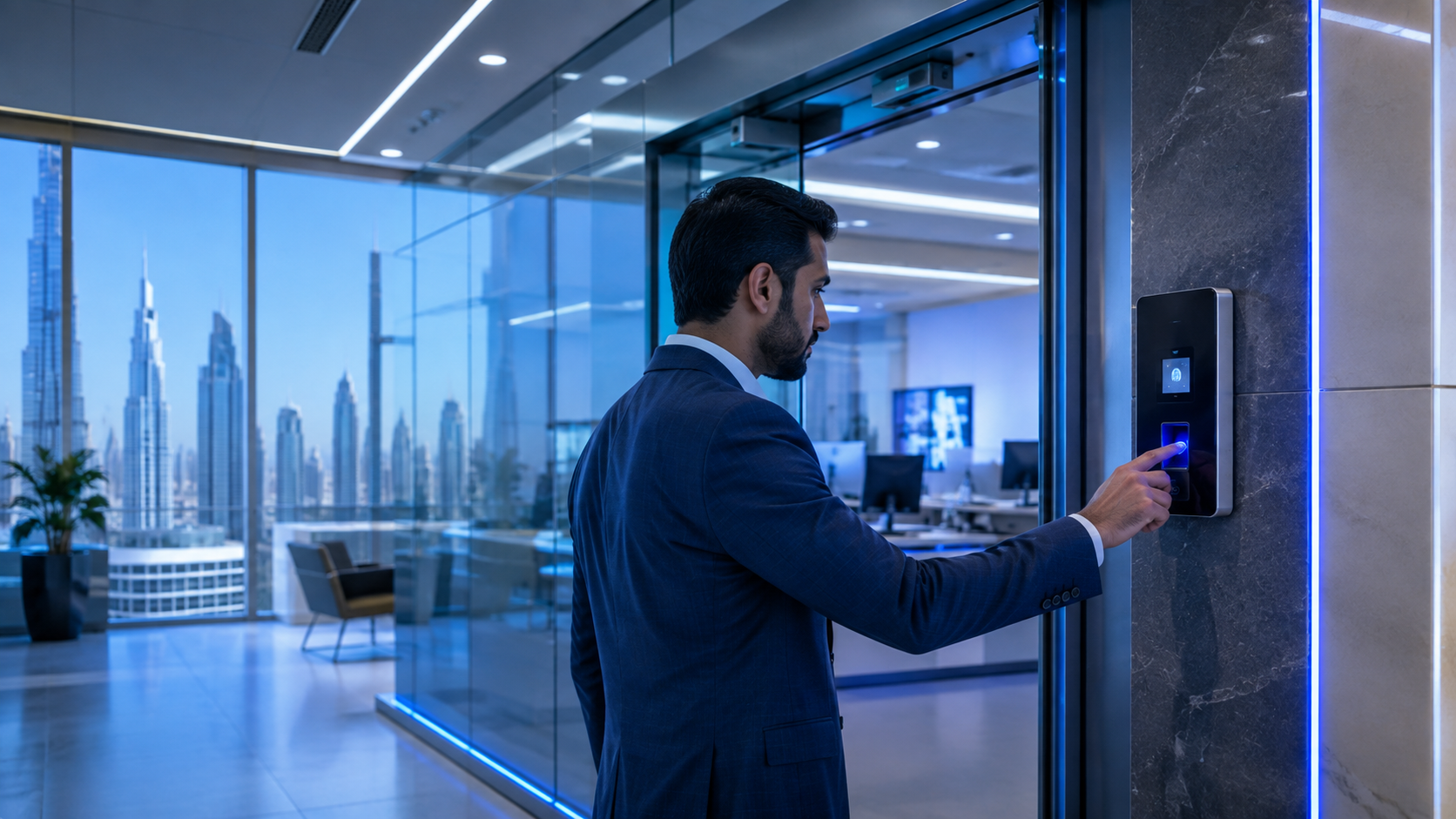
Biometric Access Control System Dubai
Secure Your Workplace with Smarter Door Access Control
Keys and shared access cards become difficult to control as a business grows. They can be lost, copied, passed between people or remain active after an employee leaves. A modern biometric access control system in Dubai provides a more reliable way to verify identity, manage entry permissions and protect restricted areas.
FutureMindIT designs and installs fingerprint, face recognition, RFID, PIN and multi-factor solutions for Dubai offices, warehouses, retail stores, healthcare facilities, schools, hotels and commercial sites. We assess the premises, recommend suitable authentication, install the door hardware, configure permissions, test the system and train authorized administrators.
CTA: Request a Free Consultation
CTA: Get a Custom Access Control Quote
What Is a Biometric Access Control System?
A biometric access control system verifies identity before allowing entry to a protected area. A user presents a fingerprint, face, card or PIN at the reader. The system checks the credential and confirms whether that person may enter the specified door at that time. If approved, the electronic lock releases; otherwise, the door remains secured and the attempt can be recorded.
Managers can control access to offices, server rooms, stock rooms, laboratories, cash-handling areas and production zones from a centralized platform. Permissions can be changed without replacing locks or collecting physical keys from every user.
Why Dubai Businesses Are Moving Beyond Keys and Shared Cards
Traditional keys provide limited visibility. They cannot show who entered, when entry occurred or whether the person still has authorization. Shared cards and common PIN codes create similar problems because credentials can be passed to someone else. A commercial system gives every user an identity and permission profile, allowing administrators to restrict access by door, department, day or time.
Businesses choose biometric and electronic access control to:
-
Reduce unauthorized entry into restricted areas
-
Replace uncontrolled physical keys and shared credentials
-
Assign different permissions to employees, contractors and visitors
-
View access events from a centralized management platform
-
Revoke access quickly when a card is lost or a user leaves
-
Protect IT rooms, inventory, records and operational areas
-
Support single-door, multi-door and multi-site security requirements
-
Create access logs for internal reviews and incident investigations
-
Integrate physical entry control with CCTV, visitor management or alarms
The goal is to strengthen security without slowing down authorized employees and approved visitors.
Our Biometric and Door Access Control Solutions
Every property has different entry points, traffic levels and security risks. FutureMindIT recommends the authentication method and system design after considering the number of doors, user capacity, working environment, integration requirements and level of control needed.
Fingerprint Access Control System
A fingerprint access control system in Dubai verifies registered users through fingerprint templates. It is practical for offices, server rooms, storage areas and locations that need stronger identity verification than a card alone. Fingerprint access also reduces credential sharing because the registered person must be present.
Reader selection should account for user volume and site conditions. Dust, moisture, outdoor exposure and the nature of an employee's work can affect fingerprint capture. A fingerprint reader should therefore be recommended only where it suits the environment.
Face Recognition Access Control
Face recognition access control in Dubai provides contactless identity verification. It suits offices, healthcare environments, hotels, schools and busy entrances where fast, touch-free entry is preferred. Device position, camera angle, lighting and user flow influence performance, making correct installation important.
Face recognition may also be combined with a card or PIN. Liveness detection, anti-spoofing, low-light performance and user capacity vary by device and must be verified during selection.
RFID Card and Hybrid Access Control
RFID cards provide quick access for employees, tenants or approved contractors. Each card can be assigned to a user, limited to selected doors and disabled if lost. A hybrid system can use RFID at general entrances while requiring a fingerprint or face plus a card for sensitive areas.
PIN, Mobile and Multi-Factor Access
Keypad entry can protect selected internal areas or act as a second authentication method. Supported platforms may also use mobile credentials. The right combination depends on security level, employee workflow and how often permissions change.
Single-Door and Multi-Door Access Control
A small office may protect its main entrance and server room, while a warehouse, hospital, school or commercial building may require centralized multi-door control. Administrators can create access groups, apply time rules and review activity from one interface. The design can also account for future doors and branches.
Core Components of a Door Access Control System
A reliable door access control system in Dubai depends on several connected components.
Biometric or Credential Reader
The reader captures a fingerprint, face, RFID card, PIN or mobile credential. Selection depends on user capacity, site conditions and required speed.
Access Controller
The controller processes access requests, applies permission rules and may manage one or several doors.
Electronic Lock
Magnetic locks, electric strikes and other locking options suit different doors, traffic levels and exit requirements.
Exit Button and Door Sensor
An exit device supports safe departure, while a door sensor can report whether a door is open, closed or held open.
Management Software
Software enrols users, assigns permissions, configures schedules, disables credentials and displays access logs. It may be cloud-based or locally hosted.
Power Supply and Backup Planning
The plan should cover stable power, backup needs, safe exit operation and system behaviour during an outage or emergency.
Smart Access Control Features for Modern Workplaces
The available features depend on the selected hardware and software, but a well-planned solution can support:
-
Individual user enrolment and permission management
-
Role-based and department-based access levels
-
Door-specific access authorization
-
Time schedules for employees, cleaning teams and contractors
-
Holiday and temporary access rules
-
Instant credential activation or removal
-
Live door and access-event monitoring
-
Alerts for denied access or doors held open
-
Searchable entry and exit logs
-
Centralized multi-door administration
-
Multi-branch management through supported platforms
-
Visitor and temporary credential management
-
Remote door release for authorized administrators
-
Integration with CCTV, alarms and supported business systems
Features should be selected around a real operational need. Adding unnecessary complexity can make the system harder to manage. The priority should be clear permissions, dependable entry and administration that the responsible team can use confidently.
Access Control Integration with CCTV and Visitor Management
Access control becomes more useful when it works as part of a wider security environment. An access event can identify which credential was used and when. A connected CCTV system can provide visual context around the same time and location, helping a security team review an incident more efficiently.
Businesses planning an integrated solution can combine access management with CCTV installation services in Dubai, visitor registration, intercoms or supported alarms. Integration scope depends on platform compatibility, network design and the specific equipment selected.
Visitor management can also improve reception security. Instead of giving every guest a permanent credential, the organization can issue time-limited access for approved doors. Contractors may receive permission only for their assigned area and working hours. Once the visit or contract ends, the credential can expire or be removed.
Where Biometric Access Control Can Be Used
Corporate Offices
Protect entrances, finance departments, executive areas and IT rooms with role-based permissions.
Warehouses and Logistics Facilities
Control stock rooms, loading areas and restricted inventory zones using shift-based permissions.
Retail Stores and Multi-Branch Businesses
Secure stock rooms, cash offices and staff entrances, with centralized permission changes where multi-site control is supported.
Healthcare Facilities
Restrict medicine storage, laboratories, records and staff-only areas. Contactless access may suit selected entrances.
Schools and Educational Institutions
Create separate permissions for staff, laboratories, records, maintenance teams and contractors.
Hotels and Hospitality
Control staff entrances, stores, offices and service rooms by department or shift.
Manufacturing and Industrial Sites
Limit entry to production zones, technical rooms and high-value areas. Device selection must account for site conditions and protective equipment.
Commercial Buildings
Manage tenants, facilities teams, service providers and restricted floors through structured access groups.
Planning Biometric Data Security and Privacy
Biometric templates and access logs require responsible administration. Before deployment, a business should define who may enrol or remove users, which administrators can view logs, how long records are retained and what happens when a person leaves.
The configuration should include restricted administrator accounts and appropriate data-protection features. Businesses must review applicable UAE data-protection requirements and any additional rules for their industry or jurisdiction. FutureMindIT can configure the technical solution around approved policies, while the organization remains responsible for its lawful processing, notices, retention and governance decisions.
Our Access Control Installation Process
Successful access control installation in Dubai begins with the door, users and operational workflow—not with a generic device recommendation.
Step 1: Requirement Consultation
We review users, doors, restricted areas, schedules, visitors and existing security systems to identify the right credential for each entrance.
Step 2: Site Assessment
We check door type, entry flow, power, network connectivity, reader position and any CCTV, visitor or software integrations.
Step 3: System Design
We specify the readers, controllers, locks, exit devices, sensors, software and permissions required for each area.
Step 4: Professional Installation
Hardware is installed and connected, with reader position, locking behaviour and safe exit requirements checked for every door.
Step 5: Configuration and User Enrolment
Users, access groups and schedules are configured. Administrative roles are limited, and temporary or visitor workflows are added where required.
Step 6: Testing and Training
Every door and credential is tested. Administrators learn how to add users, remove permissions, check logs and respond to common issues.
Step 7: Maintenance and Technical Support
Readers, sensors, user databases and supported software need periodic attention. FutureMindIT can assist as users, permissions and security requirements change.
How to Choose the Right Biometric Access Control System
The most expensive device is not automatically the best choice. Start by matching the solution to the premises and the people who will use it.
Consider these questions:
-
How many doors and users must the system manage?
-
Is the entrance indoors, outdoors or exposed to dust and moisture?
-
Would fingerprint, face recognition, RFID or a hybrid method suit the users?
-
Does the area need single-factor or multi-factor verification?
-
Should permissions change by shift, department, day or time?
-
Is centralized control required across several doors or branches?
-
Does the system need to integrate with CCTV, visitor management or alarms?
-
Who will administer enrolment, access removal and log reviews?
-
What should happen during power, network or emergency conditions?
-
What maintenance and support will be needed after installation?
A site assessment answers these questions before hardware is purchased. This reduces the risk of choosing a reader that looks suitable on paper but does not match the door, environment or business workflow.
Biometric Access Control System Cost in Dubai
The cost of a biometric access control project depends on the complete installation rather than the reader alone. A single internal door with basic fingerprint access has different requirements from a multi-door system with face recognition, centralized software and security integrations.
Important cost factors include:
-
Number and type of controlled doors
-
Fingerprint, face, card, PIN or multi-factor authentication
-
User and event-log capacity
-
Standalone or networked controllers
-
Type of electronic lock and door hardware
-
Cabling, power and backup requirements
-
Local software or cloud management
-
Number of branches or management locations
-
Integration with CCTV, visitor systems or other platforms
-
Installation conditions, training and ongoing support
FutureMindIT provides a customized quotation after understanding the site and required functionality. This helps the business compare a complete working solution rather than selecting hardware based only on the lowest device price.
Why Choose FutureMindIT for Biometric Access Control in Dubai?
An access control project connects physical doors, electronic hardware, network components, software and business policies. FutureMindIT approaches the project as a complete security and IT implementation.
Businesses work with us for:
-
Requirement-based consultation before product selection
-
Fingerprint, face recognition, RFID, PIN and hybrid options
-
Solutions for single doors, multiple doors and supported multi-site environments
-
Professional hardware installation and system configuration
-
Access-group, schedule and administrator setup
-
Integration planning with CCTV and supported security platforms
-
Testing and administrator training before handover
-
Technical support and maintenance assistance
-
Coordination with the customer's broader IT environment
Our goal is to deliver a system that authorized users can enter smoothly, responsible administrators can manage clearly and the business can expand when its requirements change.
For wider technology support, explore our IT support services in Dubai or view all FutureMindIT services.
Secure Your Premises with FutureMindIT
Take control of who can enter your workplace, when they can enter and which areas they are permitted to access. FutureMindIT can assess your premises and recommend a biometric, RFID or hybrid door access solution that fits your security requirements, user workflow and future growth.
Whether you need one protected office door, restricted access to a server room or centralized management across several entrances, our team can help plan, install and configure the complete system.
Frequently Asked Questions
What is a biometric access control system?
A biometric access control system verifies a registered physical characteristic, such as a fingerprint or face, before granting entry. The system checks both identity and assigned permission, releases the electronic lock when access is approved and can record the event in an access log.
Is fingerprint or face recognition better for door access?
Fingerprint access is practical for many indoor offices and restricted rooms. Face recognition provides contactless, fast entry for busy entrances. Dust, lighting, user volume and protective equipment should be assessed before selection.
Can biometric access control work without an internet connection?
Many controllers can make access decisions locally during an internet interruption, while cloud monitoring and synchronization require connectivity. Offline behaviour varies and should be confirmed during design.
Can the system control more than one door or branch?
Yes. Supported platforms can manage several doors or branches from a centralized interface. Capacity, networking and licensing depend on the selected system.
Can cards and biometrics be used together?
Yes. RFID may be used at general entrances, while sensitive areas require a card plus fingerprint or face for stronger verification.
Can access control integrate with CCTV?
Supported platforms can connect access events with CCTV, helping authorized teams review video around denied entry or door alerts. Compatibility must be checked first.
What happens when an employee leaves the company?
An administrator can disable the person's biometric profile, card and permissions. This should form part of the employee exit process.
Do you provide access control installation and support in Dubai?
FutureMindIT provides consultation, system design, installation, configuration, testing, administrator training and technical support for biometric and door access control requirements in Dubai.
How long does installation take?
Timing depends on doors, cabling, hardware, integrations and site access. A site assessment is required before confirming the schedule.
